

How To Repair Leather On Shoes
Tin you fix cracked leather? It's one of the most mutual questions we, as leather experts, go asked. The reply depends on the blazon of damage – simply in any case restoration volition work wonders.
Of grade, nothing quite matches the luxury or good looks of leather – and the last thing you want to see is your prized purse or briefcase slowly but surely losing its lustre. So, whether y'all have cracked leather in need of repair or simply wish to guard confronting hereafter damage, follow our pointers for keeping your hide looking fresher for longer.
How and why does leather crack?
Before nosotros explore how to repair leather, information technology's worth taking a moment to empathize some of the science under the peel. Equally with whatsoever natural material, leather can get worn and damaged over time. Information technology is, past definition, animal pare, which can become dry and prone to cracking.
When leather cracks, it's the outcome of microscopic changes in the material: leather is made up of countless tiny interwoven fibres packed tightly together, with denser connected fibres near the surface and looser ones the farther in you go. Eventually, these fibres can dry out resulting in chafing and a worn advent.
During the brute'southward lifetime, the skin is kept nourished with continuously replenishing natural oils. Once an animal skin undergoes transformation into leather, the water in the peel's protein is replaced by tanning agents. Flexibility can be retained by topping upwards with lubricating oils and waxes, depending on the leather type. Vegetable-tanned leathers, especially the Italian kind, are some of the most well-lubricated leather types around.
If you take dry out pare, yous'll know that a lack of water and oils in the upper layers of the skin tin cause rough and dry patches. Leather is no unlike. Equally, if you forget to moisturise your skin over a prolonged period, your skin will start to see further impairment. A loss of moisture tin result in the packed fibres continually rubbing against ane another every bit the leather flexes and moves. Sooner or later, these fibres become potent and tight causing cracks at the tension points.
Repairing croaky leather
Cracks by their very nature are permanent: that's considering the fibres – the very structure of the leather – have go damaged. Merely it'south not all doom and gloom. The expert news is that many cracks are piece of cake to hide – and the fix can be quick – using leather conditioners to strengthen the fibres around the cracked leather.
If y'all come across cracks, a quick inspection should decide if they're calorie-free surface ones – which are hands treatable – or deep cracks that are harder to treat but can be restored using leather crack filler, colouring and nourishing techniques. Read on for tips on how to restore dry leather and repair cracked leather.
Gear up light leather cracks
The beginning port of call should always be a strong conditioner that non only strengthens the fibres surrounding the cracks, merely besides helps blend in the scar with the rest of the leather. The effects tin exist remarkable on dried out leather – a scratch or light crack can be smoothed away and made to wait similar a natural imperfection.
Kickoff things first, here's a listing of items you'll need:
- A high-quality conditioner or cream
- Soft, dry out castor or textile
- Fine-bristled castor
- Mild soap
- A spoon
Carl Friedrik leather cream
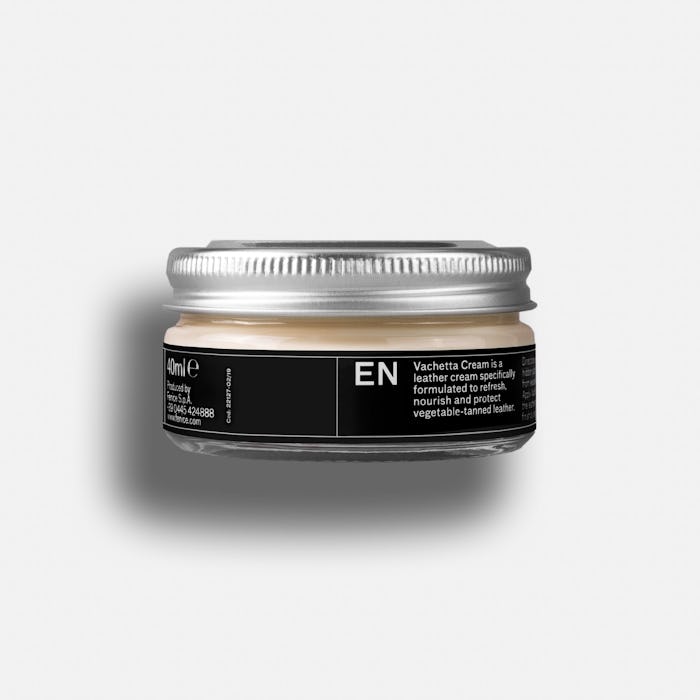
Step 1: Clean your leather
Test the soap or cleaner on a small patch beginning. Make clean the top surface of the cracks and the surrounding leather using a soft, dry brush or cloth. Follow this with a pocket-sized, fine-bristled brush and some balmy soap and clean the cracks more deeply. The aim is to get the leather in a soft, flexible country.
Step 2: Polish information technology out
Subsequently testing it on a small patch, smooth your conditioner or oil over the crack. A finger, sponge or back of a spoon does the trick: continue smoothing in the treatment until the cleft is visibly less pronounced or deep. Wipe off the backlog product and let the leather dry naturally. The leather needs time to blot the conditioner and rehydrate so permit it dry completely, preferably overnight.
Stride 3: Repeat if required
If the leather still appears overly dry, another application may be needed. Merely avoid over-oiling as this can collapse the construction of leather, leaving a waxy and slippery appearance. For the best results, re-apply the conditioner to your leather every month – this should keep the product in proficient status and stave off whatever further drying and cracking.
Repair deep leather cracks
If your leather is brittle and has deep cracks, and so using a conditioner is unlikely to work as it would only absorb into the leather. But all is non lost, with a little more elbow grease at that place'due south a good run a risk you can restore croaky leather to its erstwhile glory. Here are two methods for treating more deep-seated damage.
Method one: Using leather crack filler
You lot'll need the following:
- Lather or leather cleaner
- Cloth or sponge
- 600-grit super-fine sandpaper
- Good quality leather filler
- Palette knife
Pace 1: Clean
Using lather or leather cleaner, wash off any dirt with cloth or sponge. Once more, beginning test the cleaner on a small section first and mix any soap with water first.
Stride 2: Wait overnight for the leather to dry completely
If there's any wet on the leather this volition prevent the filler from settling into the cracks. Wipe off any wet with a dry textile to ensure information technology dries faster.
Step 3: Smoothen
Shine the cracks with a slice of super-fine sandpaper, applying gentle pressure equally you wear them down. Stop when you get a finish that looks smoothen to the impact. Then wipe off whatever dust with a dry cloth. Tip: avoid harsher, coarse sandpaper as this can leave scratches.
Stride 4: Apply leather filler
Spread the filler over the cracks with a palette knife and so brush in the paste to fill in the crack. Use more than until the crack appears filled.
Step 5: Remove excess paste with the knife
Tilt the edge of the palette pocketknife sideways and gently scrape off the excess paste. Continue to practice this until y'all tin can no longer see any overspill.
Pace 6: Allow the leather dry for six hours
This is to ensure the filler sets and solidifies. A properly ventilated room or the open air will help the leather to dry faster. However, avoid whatever direct sunlight and keep the leather away from direct oestrus as these factors tin dry the material causing further cracks. As the filler dries it may compress, and then farther layer may be required.
Method two: Blending cracks with leather dye
You'll need the following:
- Lather or leather cleaner
- Cloth or sponge
- 600-grit super-fine sandpaper
- Good quality leather filler
- Palette knife
- Leather dye
- Color-fast sponge or applicator pad
- Hairdryer
- Leather sealer
To repair cracked leather, using a dye can patch up superficial harm, but for deep cracks a combination of a leather filler and dye works all-time. Tip: if the inside of a crack is lighter in colour than the surface using a dye is your all-time option.
Footstep ane: Prepare the surface with filler.
Follow the steps to a higher place for applying leather filler, if necessary. Let the handling dry.
Footstep 2: Sand and smooth
Sand the leather down with ultra-fine sandpaper and wipe clean to prepare the surface for the dye. Gently rub along the leather'southward grain until the leather is polish to the bear upon. Wipe away any dirt and grit every bit these can affect the absorption of the colouring.
Stride 3: Utilise the dye
Cull a leather dye that closely matches your item's colour. Spread a thin glaze of the dye over the cracks with a colour-fast sponge or applicator pad. Rub the cracks to ensure even distribution of the dye.
Step 4: Allow it dry out
Let the dye dry for two minutes using a hairdryer set to low, making sure to movement the dryer dorsum and forth across the cracks to prevent the leather from drying out.
Pace 5: Blend the cracks
Blend the cracks with several coats of dye if needed. Depending on the severity of the crack, upwardly to v treatments may be required. With each treatment, dab the dye directly into the scissure, then rub the surrounding expanse to alloy them together. Dry the dye each fourth dimension with a hairdryer.
Footstep 6: Seal the deal
Treating the cracks with a leather sealer helps to protect and status the dye. Spray the sealer directly onto a sponge and rub into the affected area, applying a second coat as needed to embrace the dye. This should help prevent any stains and further impairment. Use a hairdryer on the sealant for two minutes to cure it, making sure to movement the dryer back and forth over the cleft.
Prevent leather from bully
In a nutshell, the best form of handling is prevention. When you've taken delivery of your item, keep it away from straight oestrus, sunlight and avoid storing your leather in overly dry places. An essential office of leather care is investing in a quality conditioner, so the skin doesn't dry out and fissure.
And if the worst happens, remember in that location are effective steps you can accept to prepare croaky leather. The golden rule is to treat regularly. With a little patience and care, your prized leather will turn heads for seasons to come.

Source: https://www.carlfriedrik.com/blogs/magazine/repair-cracked-leather
Posted by: hernandezdoull1950.blogspot.com
0 Response to "How To Repair Leather On Shoes"
Post a Comment